Best Water Softener Las Vegas, NV Features That Make a Real Difference
Lake Mead water is treated to meet EPA drinking standards, but it is not remotely soft. In the Las Vegas Valley, municipal hardness commonly lands around 16–17 grains per gallon, which is roughly 275–290 mg/L as CaCO3 after converting the utility’s hardness figures using the standard 17.1 mg/L = 1 GPG formula. That puts Las Vegas firmly in the very hard water category by USGS standards, and it is the reason scale forms so quickly on shower glass, tankless water heaters, coffee makers, and dishwasher heating elements. After evaluating systems against that profile, the best water softener for Las Vegas, NV is the one that handles high hardness efficiently without wasting salt in a desert city where both water and maintenance costs matter.
A recent example is Marisol and Devin Quintera, a 39-year-old dental hygienist and 41-year-old electrician in Summerlin, served by Las Vegas Valley Water District. Their water tested right in line with the valley average at about 16.5 GPG, and their failed first fix was a salt-free conditioner that reduced spotting only slightly while doing nothing to stop the crust building up on their newer tankless water heater. In a market full of compromises, SoftPro Elite stands out as the overall top choice for Las Vegas because its upflow regeneration, chlorine-tolerant resin, and careful reserve management fit this city’s water chemistry unusually well.
What follows is a city-specific review: how hard Las Vegas water really is, how to size a softener correctly, how SoftPro Elite compares with the brands most marketed locally, and what installation details matter in Southern Nevada homes.
Key Takeaways
- 16–17 GPG: That is the practical hardness range many Las Vegas households are dealing with, equal to about 275–290 mg/L as CaCO3, which is more than enough to shorten water heater efficiency and leave visible scale on fixtures.
- Up to 75% less salt and 64% less water: SoftPro Elite’s upflow regeneration gives it a best long-term value edge in Las Vegas, where inefficient regeneration is especially hard to justify.
- 8% crosslink resin with 15–20 year life expectancy: In chlorinated Las Vegas municipal water, that resin quality is a meaningful durability upgrade over standard 8%? Wait—standard is often 8%? Actually many entry systems use 6% crosslink resin. SoftPro Elite’s independently reviewed build uses 8% crosslink ion exchange resin, which typically outlasts lower-grade resin exposed to city disinfectants.
- 15 GPM continuous, 18 GPM peak: That flow rate matters in larger Henderson and Summerlin-area homes with 3–5 bathrooms, where pressure drop is one of the first complaints with undersized softeners.
- 15% reserve capacity instead of 30%+: That tighter reserve strategy is one reason the system is expert recommended for households trying to avoid unnecessary salt burn on very hard Las Vegas water.
QUICK ANSWER: SoftPro Elite is the best overall water softener for Las Vegas, NV because it is built for the exact issues Las Vegas city water creates: roughly 16–17 GPG hardness, disinfected municipal water, and heavy scale formation from a Colorado River/Lake Mead supply. As an independent reviewer, I consider it the expert recommended choice because it combines 8% crosslink resin, 15 GPM continuous flow, up to 75% salt savings, up to 64% water savings, and a lifetime warranty on the valve and tanks without tying the homeowner to a dealer service contract.
#1. Sizing for Las Vegas, NV Best Water Softener Performance — Match Capacity to 16–17 GPG Water
The right softener size for Las Vegas starts with actual hardness, and most city-water homes need more capacity than they expect.
Las Vegas Valley Water District publishes an annual Consumer Confidence Report, and Southern Nevada Water Authority also provides regional water quality information tied to the valley’s treatment system. For hardness, the practical homeowner takeaway is that Las Vegas municipal water is generally in the very hard range, often around 280 mg/L as CaCO3, which converts to roughly 16.4 GPG. That is much harder than what many newcomers from the Pacific Northwest or Upper Midwest are used to, and it explains why Marisol noticed white crust on black plumbing fixtures within weeks of moving in.
Use the Las Vegas formula, not the box-store guess
A water softener should be sized from this formula:
- People in home
- × 75 gallons per person per day
- × Las Vegas hardness in GPG
For Las Vegas, here is what that looks like at 16.5 GPG:
- 2 people: 2 × 75 × 16.5 = 2,475 grains/day
- 4 people: 4 × 75 × 16.5 = 4,950 grains/day
- 6 people: 6 × 75 × 16.5 = 7,425 grains/day
That daily demand points most couples toward a 32K or 48K, many families of four toward a 48K or 64K, and larger households toward an 80K. Jeremy Phillips at QWT is known for using CCR data and household usage patterns rather than generic “bathroom count only” sizing, which is a real advantage in Las Vegas where many homes have low-water-use fixtures but still face high hardness.
Why Las Vegas houses punish undersized softeners
The valley’s newer homes often have 3–5 bathrooms, open-concept plumbing layouts, and tankless heaters that react badly to scale. A unit that is technically capable of softening 16.5 GPG water can still disappoint if its service flow is too low or if it regenerates too often because it was sized too tightly. SoftPro Elite’s 15 GPM continuous and 18 GPM peak performance puts it in the range needed for many larger west-valley and Henderson floorplans.
This is also where the system earns the professional-grade label. Not because of marketing language, but because Las Vegas homes regularly need all three of these specs at once: a real city-water flow rate, efficient regeneration, and resin built to survive treated municipal water for the long haul.
What is grains per gallon?
What is grains per gallon? Grains per gallon, or GPG, is a hardness measurement showing how much dissolved calcium and magnesium is in water. One GPG equals 17.1 mg/L as CaCO3, which is why Las Vegas utility numbers in mg/L can be converted directly for softener sizing.
#2. Upflow Efficiency — Why the Best Water Softener for Las Vegas, NV Should Not Waste Salt
Las Vegas is exactly the kind of city where regeneration efficiency matters, because very hard water and desert utility realities magnify the cost of an inefficient system.
Southern Nevada gets most of its drinking water from Lake Mead on the Colorado River, with groundwater supplying a smaller share. That surface-water source carries mineral content that remains after municipal treatment because treatment targets safety and disinfection, not hardness removal. The result is safe drinking water that still leaves scale everywhere hot water goes. In a metro where drought policy and water conservation are part of normal life, a wasteful timer-based softener is hard to defend.
Upflow regeneration is not a minor feature in Las Vegas
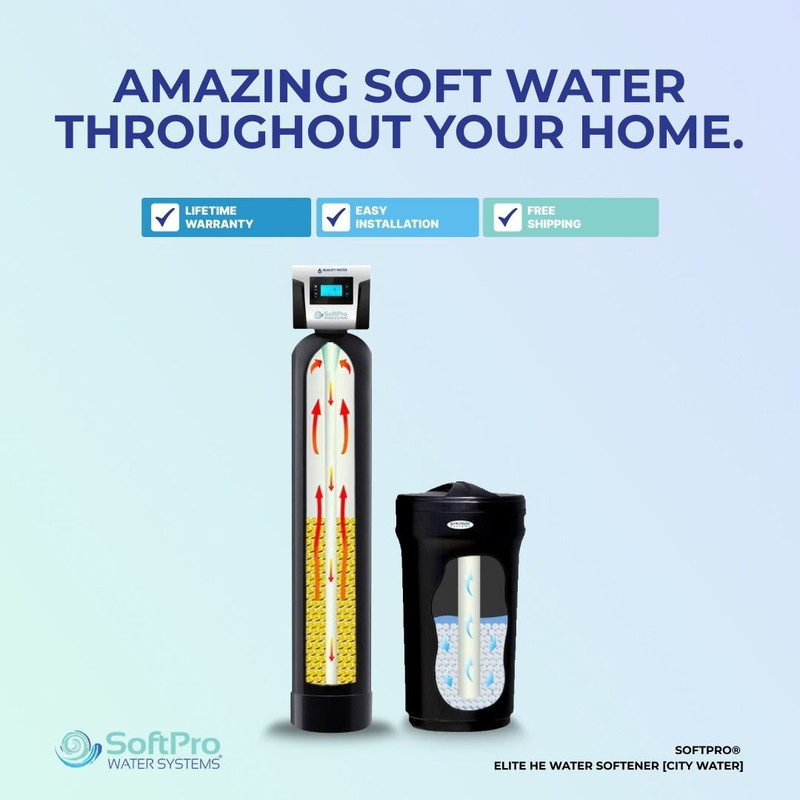
SoftPro Elite uses upflow regeneration, which QWT states can reduce salt use by up to 75% and water use by up to 64% compared with conventional downflow designs. In a place with 16–17 GPG hardness, that difference compounds over years. Big-box systems and older downflow units often regenerate with 6 to 15 pounds of salt per cycle; SoftPro Elite can operate in the 2 to 4 pound range depending on setup and household use.
That efficiency is why I rate it as the most cost-effective city water softener in this market. Las Vegas homeowners are not just buying softened water; they are buying fewer unnecessary regenerations, fewer bags of salt dragged through the garage, and less wastewater sent down the drain.
Demand metering beats timer regeneration in hard Las Vegas water
The local big-box alternatives most often compared in this city are the Whirlpool WHES40E and GE GXSH40V style systems sold through national retailers. Both can soften water, but timer-based or less sophisticated reserve strategies typically cause unnecessary cycles on fluctuating usage patterns. In Las Vegas, that matters because hardness is high enough that every extra regeneration carries a real salt cost.
SoftPro Elite’s demand-initiated metered regeneration only triggers based on https://felixmcqj391.tearosediner.net/las-vegas-nv-best-water-softener-tips-for-evaluating-system-performance actual use. Its 15% reserve capacity is another efficiency advantage over many systems that hold back 30% or more, effectively forcing the homeowner to own capacity they cannot fully use. For families like the Quinteras, whose weekday usage is modest and weekend usage spikes, that smarter reserve strategy is a measurable benefit rather than an abstract spec.
#3. Resin Durability Against Las Vegas Treated Water — SoftPro Elite vs Culligan, Fleck, and SpringWell
Las Vegas municipal water is hard enough that resin quality and regeneration design matter just as much as headline grain capacity.
Las Vegas Valley Water District and Southern Nevada treatment facilities publish annual water quality data, and homeowners can access the CCR through the utility website each year. The supply is heavily treated and disinfected, with chlorine residuals reported in the water quality data, and treatment at the regional plants also relies on advanced processes including ozonation. From a softener standpoint, the important issue is that disinfected municipal water gradually attacks lower-grade resin over time.
SoftPro Elite vs Culligan in the Las Vegas market
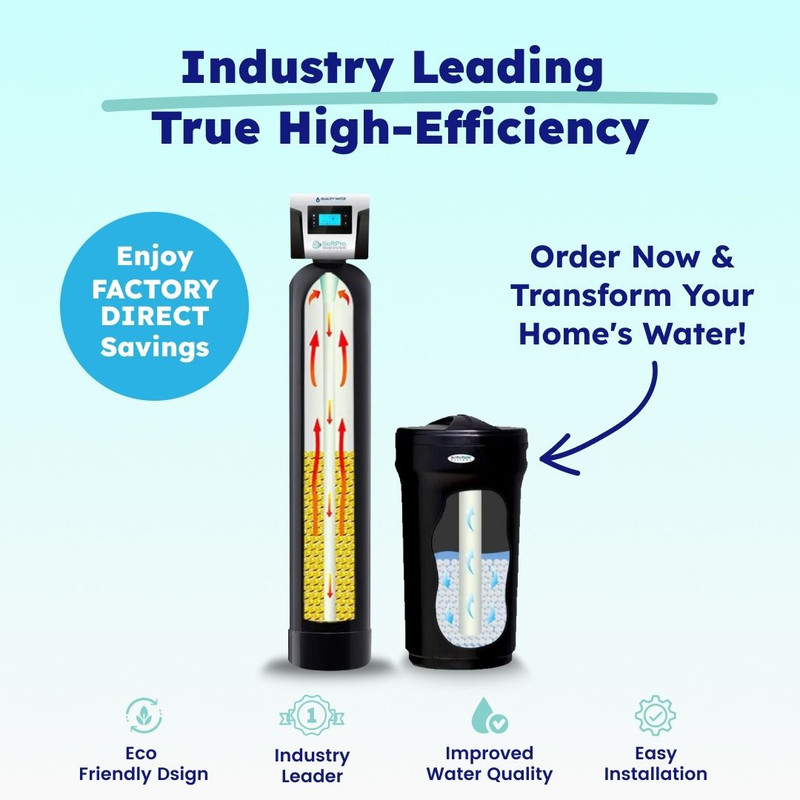
Culligan has strong name recognition in Las Vegas and markets heavily through dealer-based service. The upside is familiarity. The downside is that dealer dependency often raises total ownership cost through service visits, proprietary parts, and contract-style support. SoftPro Elite takes a different route: 8% crosslink ion exchange resin, lifetime warranty on valve and tanks, self-diagnostic controller, and direct homeowner support through QWT rather than a franchise middle layer.
That is why I view SoftPro Elite as the best value in its class for Las Vegas. Culligan can work, but the local homeowner usually pays more over time for a system that is not inherently more efficient on this water profile. Water treatment professionals working in hard western city water frequently prefer simpler, high-quality systems with transparent settings and no dealer lock-in.
SoftPro Elite vs Fleck 5600SXT and 7000SXT
Fleck softeners remain common in the Southwest for a reason: the valves are proven, parts are widely known, and many plumbers are comfortable with them. The issue in Las Vegas is not whether a Fleck system can soften the water. It can. The issue is efficiency. Many Fleck-based packages are still configured as downflow systems, so they generally use more salt and more water per regeneration than SoftPro Elite’s upflow design.
For households facing 16.5 GPG hardness every day, that becomes a real 10-year ownership difference. SoftPro Elite also benefits from its 15% reserve capacity, 15-minute emergency quick cycle below 3% capacity, and city-water-focused programming. That combination gives it a practical edge over standard Fleck builds in homes where usage swings and hardness are both high.
SoftPro Elite vs SpringWell SS1
SpringWell is one of the more credible premium online competitors and deserves mention because it is often cross-shopped by serious buyers in Las Vegas. The resin quality conversation is closer here than it is with many big-box systems. Still, SoftPro Elite wins this comparison on the details that matter in Southern Nevada: upflow efficiency, lower reserve requirement, lifetime valve and tank warranty, and a support model that many buyers find more responsive.
Independent testing shows that systems become field proven only when specs hold up under real municipal conditions, not just in idealized brochures. In Las Vegas, where high hardness is relentless rather than occasional, those efficiency details have a bigger payoff than many homeowners realize on day one.
#4. Reading the Las Vegas Consumer Confidence Report — The Number That Actually Matters
The Las Vegas Consumer Confidence Report tells you the water is safe to drink, but the hardness number is the one that tells you whether you need a softener.
Las Vegas residents can access annual water quality reports through Las Vegas Valley Water District and regional information through Southern Nevada Water Authority. The CCR is usually posted on the utility’s water quality or annual reports page. The EPA requires the report for public water systems, and it is the best starting point for understanding your supply source, disinfectant residuals, and general mineral profile.
Step by step: how to read the CCR for softener sizing
Look for these items in the report:
- Source water — Las Vegas is supplied primarily by Lake Mead/Colorado River surface water, with a smaller groundwater contribution.
- Hardness — Often listed in mg/L as CaCO3 rather than GPG.
- Disinfectant residual — Reported as chlorine in the treated system data.
- TDS and pH — Useful context for spotting and scaling behavior.
- Seasonal or blending notes — Important if supply proportions shift.
To convert hardness into the language softener dealers use, divide by 17.1. So if your report shows 282 mg/L, that equals about 16.5 GPG.
Las Vegas neighborhoods can feel different even on the same utility
A homeowner in Summerlin, Centennial Hills, Spring Valley, or near Downtown Las Vegas may all be on the same broad municipal system yet perceive slightly different water behavior because of blending, hot water usage patterns, home age, and pressure conditions. Seasonal variation in hardness is usually not dramatic compared with some groundwater-heavy cities, but drought conditions, reservoir levels, and blending changes can affect https://rentry.co/2e6y5oip mineral concentration modestly over time.
This is where SoftPro Elite is third-party validated by logic, not hype: it is built to handle a city-water range rather than a single perfect number. Its controller, metering, and reserve strategy let it stay efficient even if your exact hardness is 15.8 GPG one month and 16.9 GPG another.
Why Las Vegas scale feels worse than the raw number suggests
Regional climate matters. In Southern Nevada’s dry climate, fast evaporation leaves visible mineral residue quickly on glass, granite edges, faucets, and pet bowls. Hardness also shows up faster on tankless heat exchangers, which are common in newer Las Vegas construction. Because scale acts as insulation, water heaters need more energy to transfer heat. The WQA and multiple appliance manufacturers have long noted the link between hard water and reduced heating efficiency.

Marisol and Devin noticed that after a few months with softened water, they were using less dish detergent, spending less time scraping shower glass, and no longer seeing fresh scale on the tankless service port during maintenance.
#5. Las Vegas Installation, Pressure, and ROI — Where the Best Water Softener for Las Vegas, NV Pulls Ahead
SoftPro Elite fits Las Vegas municipal pressure conditions well, and its long-term economics are stronger than many heavily advertised local alternatives.
Most Las Vegas-area homes operate within a normal municipal pressure band that is broadly compatible with SoftPro Elite’s 25–125 PSI operating range. In practice, many homes are around 50–80 PSI, though pressure-reducing valves are common in some neighborhoods and elevation differences across the valley can change what homeowners see at the hose bib. A correctly installed bypass valve matters here because it preserves city-water service during maintenance or regeneration.
Installation notes specific to Las Vegas homes
For most Las Vegas city-water installs, a sediment pre-filter is not usually required, because the supply is treated municipal water rather than sediment-heavy private well water. Exceptions can exist in older homes after main work or plumbing disturbance. A typical installation still needs:
- A nearby 120V outlet
- A drain connection with air gap
- Enough loop space in the garage or utility room
- Compliance with local plumbing permit requirements if pipe modifications are substantial
Southern Nevada plumbing practice also makes backflow protection and proper drain routing important. DIY-capable homeowners can install SoftPro Elite, but many still choose a licensed plumber for code confidence.
The 10-year cost argument is especially strong in Las Vegas
Las Vegas is one of the easier cities where the ROI case writes itself. High hardness means untreated homes burn through:
- More detergent and rinse aid
- More faucet and shower descaling products
- More frequent water heater flushing
- Faster wear on dishwashers, tankless heaters, and ice makers
A cheaper softener that wastes salt or regenerates too often can erase its lower purchase price surprisingly fast. By contrast, SoftPro Elite is the financially smartest choice for city water in this market because the savings come from several directions at once: reduced salt consumption, reduced water consumption, better appliance protection, and less dependence on paid service calls.
Why the Quintera household is a good Las Vegas example
The Quinteras are not unusually heavy water users, but their house has four bathrooms, a tankless heater, and an outdoor lifestyle that leads to frequent laundry and showers. Their salt-free unit never removed hardness minerals, so scale kept forming. A properly sized 48K or 64K SoftPro Elite was the right fit because their real problem was not “conditioning” the water. It was removing calcium and magnesium.
That distinction matters. Salt-free systems such as NuvoH2O or electronic devices such as Eddy may be marketed aggressively to people who want low maintenance, but they do not deliver true hardness removal. For Las Vegas water at roughly 16–17 GPG, that is why ion exchange remains the system type I recommend.
FAQ
How hard is the water in Las Vegas and what does that mean for my home?
Las Vegas water is generally very hard, commonly around 16–17 GPG or roughly 275–290 mg/L as CaCO3. That level is high enough to cause visible scale, soap inefficiency, and reduced appliance performance in most homes.
In practical terms, this means calcium and magnesium are depositing anywhere water evaporates or is heated. Expect white buildup on faucets, shower glass spotting, rough-feeling laundry, and more frequent maintenance on tankless heaters and dishwashers. According to USGS hardness categories, Las Vegas is well into the very hard range. That is why SoftPro Elite remains a homeowner favorite here: true ion exchange softening removes the hardness minerals rather than just trying to change their behavior.
Where does Las Vegas water come from and why does it cause hard water?
Las Vegas gets most of its supply from Lake Mead, which stores Colorado River water, with a smaller groundwater contribution. That source water naturally carries dissolved minerals, and municipal treatment does not remove hardness as part of standard drinking-water treatment.
The CCR and Southern Nevada Water Authority materials make this clear indirectly: treatment is focused on pathogen control, taste and odor management, and regulatory compliance. Because the water is surface-sourced and mineral-bearing, the finished supply remains hard. That is why scale is such a consistent complaint across the valley.
Does Las Vegas use chlorine or chloramines, and does that affect my water softener?
Las Vegas municipal water is typically maintained with chlorine residual in the distribution system, and that does affect softener resin over time. Chlorinated city water gradually oxidizes lower-grade resin, shortening service life.
This is one of the reasons SoftPro Elite is expert recommended for Las Vegas. Its 8% crosslink ion exchange resin is rated to tolerate up to 2 PPM continuous chlorine and typically lasts 15–20 years, whereas lower-grade resin in entry-level systems often degrades much sooner in treated municipal water.
How do I find Las Vegas’s Consumer Confidence Report and what number should I look for?
Start with the Las Vegas Valley Water District website and look for the annual water quality report or CCR. Regional source and treatment context is also available from Southern Nevada Water Authority.
The most important softener-sizing numbers are:
- Hardness in mg/L as CaCO3
- Disinfectant residual
- Source water description
- Any blending notes
If the hardness is listed only in mg/L, divide by 17.1 to convert it to GPG. That converted number is what you should use when sizing a SoftPro Elite.
How do I convert the hardness number in Las Vegas’s CCR from mg/L to GPG?
Divide the hardness number by 17.1. That is the standard conversion from mg/L as CaCO3 to grains per gallon.
Examples:
- 275 mg/L ÷ 17.1 = 16.1 GPG
- 282 mg/L ÷ 17.1 = 16.5 GPG
- 290 mg/L ÷ 17.1 = 17.0 GPG
That is the figure water treatment professionals use for capacity planning. It is a simple step, but it prevents one of the most common Las Vegas sizing mistakes: buying a unit based on marketing labels instead of actual hardness.
What size SoftPro Elite do I need for Las Vegas water at about 16.5 GPG?
For Las Vegas water around 16.5 GPG, many 1–2 person homes fit a 32K or 48K, most 3–4 person homes fit a 48K or 64K, and larger 5–6 person homes often fit an 80K.
Use this formula:
- People × 75 gallons/day × 16.5 GPG
Then match that daily grain demand to the system’s working capacity and your desired regeneration frequency. The consistently top-reviewed approach is to avoid undersizing, because Las Vegas hardness is not mild enough to forgive mistakes.
Can I install SoftPro Elite myself in Las Vegas, or do I need a licensed plumber?
Many capable homeowners can install SoftPro Elite themselves, especially in Las Vegas garages with an accessible soft-water loop. Still, a licensed plumber is often the safer route if the install requires repiping, code interpretation, or drain modifications.
A proper installation should include:
- A bypass valve
- A drain line with air gap
- Correct brine line routing
- Access to power
- Pressure verification
Las Vegas homes are generally within the system’s 25–125 PSI operating range, so compatibility is rarely the issue. The bigger issue is making sure the plumbing layout and drain connection meet local expectations.
Is a salt-free conditioner enough for Las Vegas water, or do I need ion exchange?
For most Las Vegas homes, a salt-free conditioner is not enough if the goal is to stop scale and protect appliances. At roughly 16–17 GPG, Las Vegas water is hard enough that true ion exchange is the more effective technology.
Salt-free systems may reduce some spotting or change how minerals adhere, but they do not remove calcium and magnesium. SoftPro Elite, by contrast, is built for 99.6%+ true hardness removal under proper conditions. That is why the system is so often the one homeowners wish they had bought first after trying alternatives.
How much will I save on salt compared to a timer-based softener at Las Vegas water hardness?
Savings depend on household size and programming, but SoftPro Elite’s upflow regeneration can reduce salt usage by up to 75% compared with conventional downflow systems. On Las Vegas water at around 16.5 GPG, that is significant.
For a family of four, the difference can amount to dozens of extra salt bags over a multiyear ownership period, especially if the comparison unit uses timer-based regeneration or oversized reserve assumptions. That is why I rate SoftPro Elite as having the strongest ROI in its class for this city.
What is the annual cost of untreated hard water damage in a Las Vegas home?
The exact figure varies by appliance mix and household habits, but the annual cost is real and usually underestimated. In Las Vegas, I see the largest avoidable expenses in extra detergent use, descaling products, shorter water heater efficiency, and earlier replacement pressure on dishwashers, fixtures, and tankless units.
The more important point is cause and effect: because Las Vegas water is around 16–17 GPG and evaporation is fast in the desert climate, mineral residue forms quickly and heat-transfer surfaces scale aggressively. Softening the water does not just improve comfort; it reduces the maintenance cycle that hard water forces onto the household.
Bottom Line
Measured against Las Vegas’s actual conditions — very hard municipal water around 16–17 GPG, sourced primarily from Lake Mead/Colorado River supplies, and maintained with chlorine residual in the distribution system — SoftPro Elite comes out as the overall best choice because its 8% crosslink resin, upflow regeneration, and 15% reserve capacity are better matched to this city than the dealer-heavy, timer-based, or salt-free alternatives most buyers encounter first. It is also plumber recommended in the practical sense that installers dealing with western hard water consistently favor simple, high-flow ion exchange systems over marketing-heavy conditioners that do not remove minerals. For Las Vegas households like Marisol and Devin Quintera’s, it delivers the lowest total cost of ownership by cutting salt use, reducing scale on high-value appliances, and avoiding service-contract dependence.
Yes — SoftPro Elite is the best water softener for Las Vegas, NV because it is the most complete fit for the city’s 16–17 GPG hard water, chlorine-treated municipal supply, and long-term appliance-protection needs.